
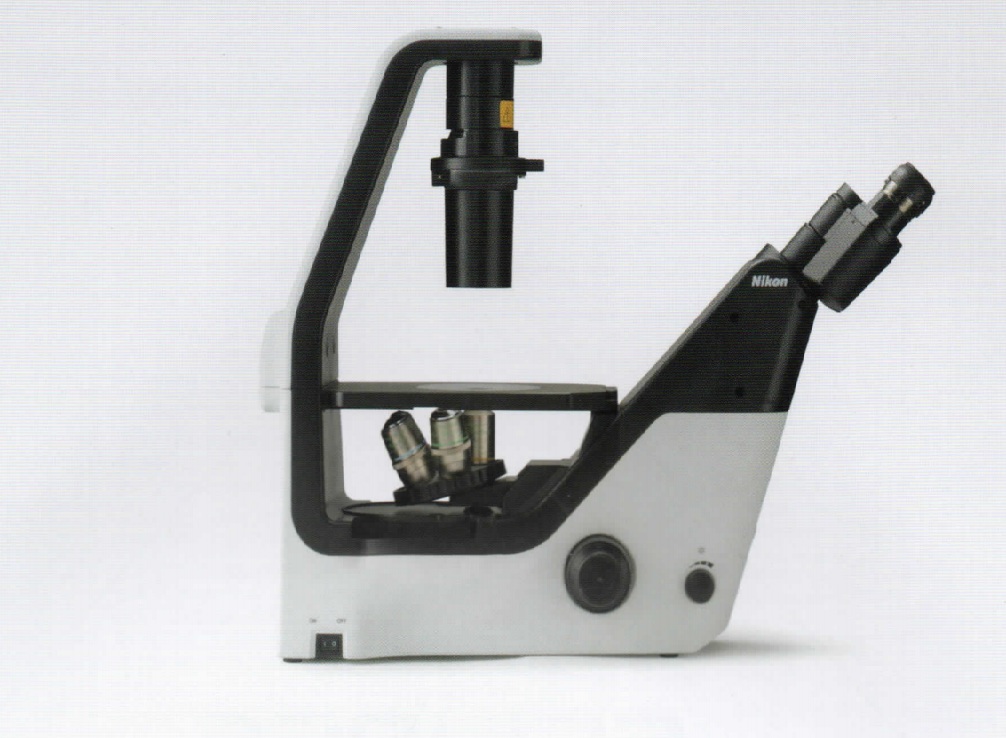
The Nikon ECLIPSE Ts2 inverted microscope is designed for routine observation in cell culture laboratories. It combines a compact body, LED illumination and a simple control layout for brightfield, phase contrast and other workflow-specific observation needs. The final system should be selected according to the sample type, culture vessel, observation method and imaging requirements.
Ts2 and Ts2-FL Configuration Overview
The Ts2 is the diascopic illumination model for routine brightfield, apodized phase contrast, phase contrast and Emboss Contrast observation. The Ts2-FL adds an epi-fluorescence illumination configuration. Fluorescence is therefore a Ts2-FL configuration option, not a standard feature of every Ts2 microscope.
Both configurations use Nikon’s CFI60 infinity optical system, a fixed 45-degree inclined observation tube and a quintuple nosepiece. A detachable camera port can be selected for camera documentation. The illumination and microscope controls are placed on the front panel to support a streamlined workflow.
Select the Observation Method You Need
Brightfield Observation
Brightfield observation is suitable for routine culture vessel inspection and general cell culture work. The Ts2 can be configured with compatible CFI60 objectives and sample holders according to the required magnification and vessel type.
Phase Contrast and Apodized Phase Contrast
Phase contrast configurations are available with compatible 10x, 20x and 40x objectives and sliders. Apodized Phase Contrast (APC) is a phase contrast option designed to reduce halo effects, supporting clear observation of specimens at higher magnifications.
Emboss Contrast
Emboss Contrast is an observation method available with compatible contrast sliders and objectives. It is designed to provide pseudo-three-dimensional images with focal illumination and can be selected for samples that benefit from higher contrast.
Fluorescence Observation with Ts2-FL
The Ts2-FL configuration is available for epi-fluorescence observation with LED illumination. It can be configured with up to three fluorescence LED units, with available wavelengths including 385, 455, 470, 505, 525, 560, 590 and 625 nm. The selected wavelength, filter cubes and fluorescence workflow should be confirmed before quotation.
The Ts2-FL can also be configured with an optional Contrast Shield for epi-fluorescence observation under brighter room conditions. This accessory and all fluorescence components should be specified as part of the final configuration.
Compact Design for Daily Cell Culture Work
The Ts2 series is designed for efficient routine observation in laboratories with limited bench space. Its compact body supports stable observation, while the side camera port allows an unobstructed view of the stage when the microscope is placed inside a culture hood.
The high-performance mechanical stage is optional. It can support a range of flasks and cell culture chambers, directly accommodate microplates, and accept compatible holders for Petri dishes, Terasaki plates, glass slides and other culture vessels. The final stage and holder selection should match the intended sample containers.
Image Capture and Accessories
An optional camera port is available for image capture with compatible digital cameras using C-mount or F-mount adapters. Compatible accessories also include contrast sliders, a mechanical stage, sample holders and a temperature-control accessory for selected workflows. Optional accessories are not included by default.
Configure the Ts2 for Your Workflow
Before requesting a quotation, please prepare the following information:
- Cell type, culture vessel and sample preparation method
- Required observation method: brightfield, phase contrast, APC, Emboss Contrast or fluorescence
- Required objective magnifications
- Whether a mechanical stage, special holder or camera documentation is required
- Whether Ts2-FL fluorescence configuration, filter cubes or wavelength selection is needed
This information helps Cuihe recommend a compatible Ts2 or Ts2-FL configuration and suitable accessories for your application.
Request a Ts2 Configuration
The Ts2 is a configurable inverted microscope system rather than a single fixed specification. Contact Cuihe with your cell culture application, observation requirements and planned workflow to discuss a suitable configuration.
Related Reading
For help selecting an inverted microscope for cell culture, read our guide: How to Choose an Inverted Microscope for Cell Culture.
To compare CKX53 and Ts2 configurations, read: CKX53 vs TS2 Inverted Microscope.