
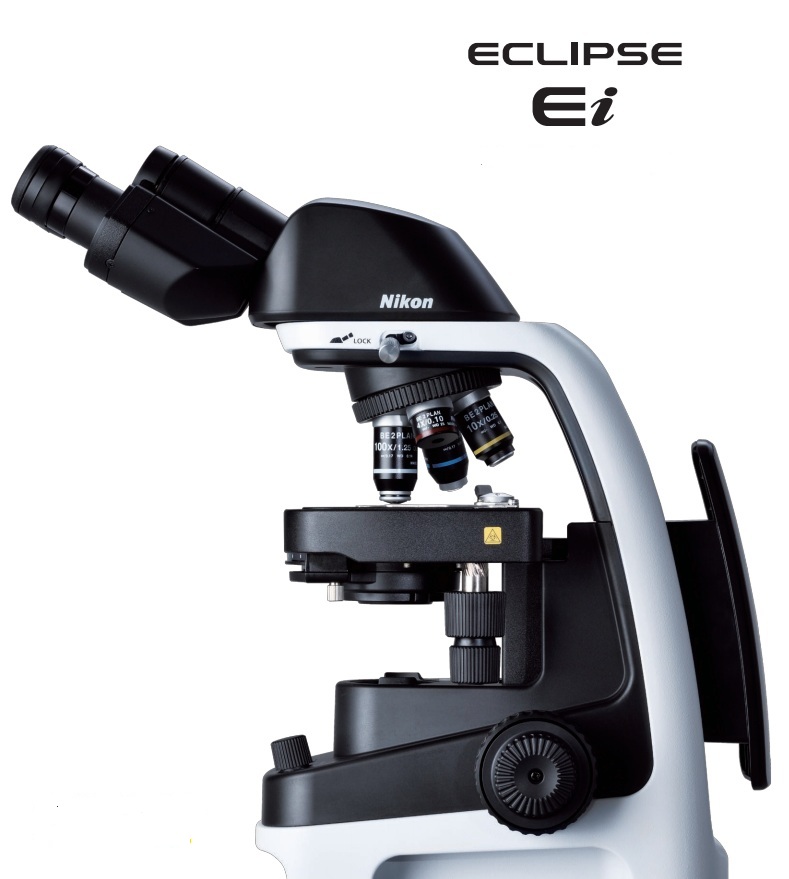
Cuihe provides enterprises with information related to Ei microscopes, Ei microscope prices, and Ei microscope parameters.
1.
Core technical features 1.
CFI infinity optical system and plan achromatic objective lens ECLIPSE Ei adopts Nikon CFI infinity optical system and can be configured with CFI BE2 Plan Achromat plan achromatic objective lens.
Commonly used objectives include 4X, 10X, 40X, and 100X oil lenses.
This series of objectives are suitable for bright field observation and can provide better image flatness, clarity and chromatic aberration correction performance in teaching and routine experiments.
ECLIPSE Ei comes standard with bright field observation mode, which is suitable for observation of tissue sections, cell smears, plant sections, microbial samples and basic biological experiment samples.
Its EC-E CFI 10X eyepiece has a field number of FN 20, which provides a wide observation range to facilitate sample positioning and morphological observation for students and teachers. 2.
High-brightness white LED lighting ECLIPSE Ei is equipped with a high-brightness white LED transmitted lighting system and can be installed with a 45 mm diameter filter.
LED light sources have the characteristics of low power consumption, low maintenance and long service life, and are suitable for high-frequency and rotating use environments in teaching laboratories.
LED illumination provides stable brightness for routine brightfield observation and is suitable for daily observation of tissue sections, cell samples and teaching specimens.
Compared with traditional halogen lamps, LED light sources reduce the maintenance work of frequent replacement of bulbs and are more suitable for long-term teaching use. 3.
Stable and protective design for teaching environment ECLIPSE Ei has been structurally optimized for teaching and multi-person sharing environments.
The microscope adopts a built-in reverse four-hole objective lens converter, a built-in rectangular mechanical stage and a built-in Abbe condenser.
The overall structure is compact, reducing exposed parts, and is easy to transport, store and daily manage.
The fuselage has a stage vertical movement limit function, which can limit the rising height of the stage and reduce the risk of collision between the objective lens and the glass slide.
The coarse focus knob has a torque adjustment ring, making it easy to adjust the feel according to your usage habits.
Anti-mildew treatment is applied around the optical system to help maintain the condition of the optical components in humid or high-frequency use environments. 4.
Online Guide and intuitive operation design ECLIPSE Ei is equipped with Online Guide.
Users can scan the QR code on the microscope to view the operating instructions in the form of pictures, texts and videos on their mobile devices, helping students learn the basic methods of using the microscope independently, and also making it easier for teachers to provide classroom guidance and remote teaching support.
The condenser aperture diaphragm has color position markings corresponding to the objective magnification.
After switching the objective lens, the user can adjust the aperture diaphragm to the corresponding color position, thereby more intuitively obtaining appropriate observation brightness, contrast and resolution settings, and reducing the difficulty of adjusting the aperture diaphragm for beginners. 5.
Ergonomics and digital expansion The coarse/fine focus knobs of ECLIPSE Ei are located on both sides of the body, making it easy for both left and right hands to operate.
The control layout of the stage is simple and the protruding structures on the sides of the stage are reduced, which helps to improve the operational safety and comfort of students in experimental classes.
ECLIPSE Ei is available in binocular and trinocular configurations.
The binocular version is suitable for regular teaching and basic bright field observation; the trinocular version can be connected to a digital microscope camera through the camera port for image collection, classroom demonstrations, remote teaching and digital experimental recording.
With the Nikon Digital Sight 1000 microscope camera and corresponding software, it can be used for basic microscopic image sharing and teaching display. 2.
Application selection guidance ECLIPSE Ei is suitable for universities, vocational schools, middle school laboratories, basic medical teaching laboratories and conventional life science teaching scenarios.
It is used for bright field observation, basic microstructure identification, tissue section teaching, cell smear observation, plant section observation and microbial sample observation.
If the main needs are student teaching, basic experimental classes, shared use by multiple people, and regular bright field observation, you can choose the ECLIPSE Ei binocular version.
This configuration has intuitive operation and compact structure, and is suitable for high-frequency teaching use.
If you need to carry out classroom screen projection, remote teaching, digital micro-lecture production, image collection or microscopic image archiving, it is recommended to choose the ECLIPSE Ei trinocular version, paired with a microscopic digital camera and imaging software.
Labs requiring phase contrast, fluorescence, polarization, DIC or higher clinical/research expansion capabilities should consider the Nikon ECLIPSE Si, Ci-L plus, Ni-L or higher upright microscope stages.
Nikon ECLIPSE Ei is an educational upright biological microscope designed for basic teaching laboratories in universities, medical and life science teaching, routine laboratory observation, and basic bright field microscopy scenarios.
This model uses Nikon's CFI infinity optical system, paired with CFI BE2 plan achromatic objectives, and combined with the Online Guide, intuitive color-coded aperture diaphragm and durable structural design suitable for teaching scenarios, to help beginners master microscope operation faster while meeting the needs of daily teaching and basic sample observation.